
Agentic payments
How Agentic Payments Could Disrupt Traditional Banking Systems

Author
Author
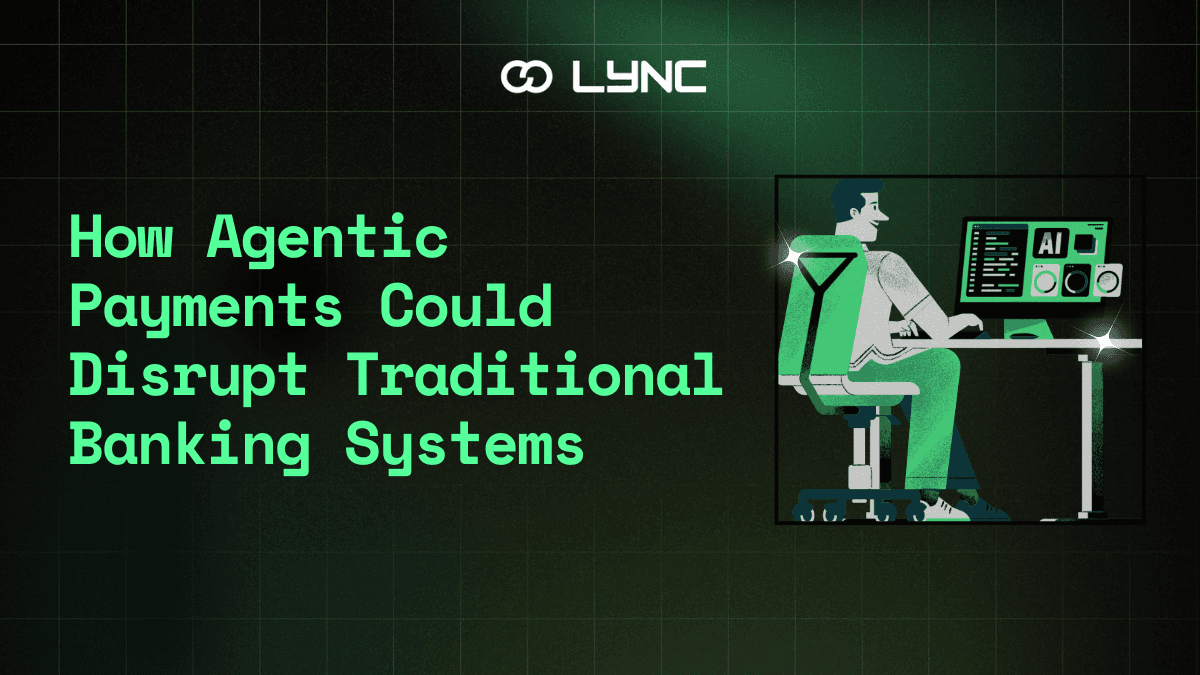
Imagine this: your bills are paid, flights booked, and that unused gym subscription quietly canceled, all without lifting a finger. That’s the subtle power of agentic payments, where AI agents handle your money moves in the background. They don’t ask. They just act. No waiting, no forgetting, no banking hours.
And as this tech slips into more hands, the old systems may begin to feel a little… outdated.
Agentic payments refer to financial transactions carried out by autonomous software agents on behalf of a user. These AI agents are trained to understand your preferences, anticipate your needs, and execute payments accordingly without needing to constantly check in with you.
Think of them as financial assistants that never sleep. Whether it’s paying your rent on the first of the month or buying concert tickets the moment they drop, agentic systems are built to act fast, smart, and in your best interest.
Agentic payments rely on a blend of AI, real-time data analysis, and programmable payment infrastructures. These agents can:
In essence, they’re rule-based systems that evolve with you.
Recently, Visa, Mastercard, PayPal, and Coinbase have all made major announcements about enabling AI agents to make online purchases. Tech giants like Amazon, OpenAI, Perplexity, and Google are racing to build AI shopping capabilities.
But with all this going on, it’s important to keep two things in mind:
Yes, it’s complex. Building agents that can safely spend for you is no small feat. It’s at least twice as tricky as setting up regular online payments. But with time, testing, and a few more breakthroughs, these bots will go from experimental to essential.
Still paying for that workout app you used twice in January? Your AI agent sees the inactivity, sighs on your behalf, and cancels it. No guilt trips needed.
Instead of setting reminders to book flights, your AI keeps an eye on your calendar and price trends then books when the timing and price are right.
When bills are coming up or spending starts to creep, your AI can shift money from non-essentials to savings helping you stay on track without micromanaging.
Traditional banks wait for you to take action. You have to log in first, click around, confirm a transfer, and then wait some more. It’s a reactive system built for yesterday’s pace.
Agentic systems flip that model entirely. They don’t wait for instructions; instead, they anticipate your needs and act in real time. That’s not just more convenient; it’s a fundamental shift in how money moves.
A recent survey of 694 banking and payments executives found that 70% are actively exploring or using AI tools, but only 9% are aggressively rolling out AI across their entire organization, indicating a significant early-stage adoption gap
Why pay $25 in wire fees when your AI can route payments over stablecoin rails for pennies? Agentic payments are often built on blockchain networks that support low-cost, instant transfers. This makes traditional banking fees not just inconvenient but irrelevant.
AI agents can personalize your financial activity minute by minute. Banks, with their batch processing and generic offers, feel clunky by comparison. People want services that adapt instantly to their lives, not quarterly updates.
LYNC is building the infrastructure that makes agentic payments work seamlessly on mobile. Our Paymaster architecture enables developers to sponsor transaction gas fees, eliminating the need for users to hold native tokens or manage complex gas setups. This fully aligns with our vision: programmable, stablecoin-enabled transactions are the backbone of AI agents managing money efficiently behind the scenes.
One of our standout features is frictionless wallet onboarding. With just a few taps, users can have a fully operational wallet, often without being aware it has happened. By abstracting away key management and wallet setup, we make it easy for agentic systems to spring into action without manual intervention.
For developers, we provide robust APIs, SDKs, and Paymaster tooling. These make it simple to connect AI-driven logic to wallet operations, automate transactions, and fine-tune behavior based on user preferences. Whether it’s recurring payments, dynamic portfolio rebalancing, or automated stablecoin remittances, LYNC provides the everything-you-need toolkit to scale agentic finance, especially in mobile-first regions.
By tackling both user and developer needs, LYNC isn’t just talking about the future of finance. It’s building it.
Letting an AI handle your money sounds risky. Users need clear ways to set spending limits, approve or override actions, and receive real-time updates.
Agentic payments challenge how intent and authorization are defined in financial law. Regulators will need new frameworks for what counts as “user consent” when decisions are made by AI.
With great automation comes great vulnerability. These systems must include robust safeguards like smart contract auditing, transaction previews, and fail-safes.
They either adapt or fade. It might sound dramatic, but it’s the truth. Every major tech shift has left behind those who failed to evolve- from dial-up ISPs to DVD rentals. Agentic finance is no different. Banks that don’t adapt won’t just fall behind, they’ll become obsolete.
Banks that embrace agentic infrastructure by offering API access, programmable payments, or integrating stablecoins might survive and thrive. Those that stick to manual wire forms and 3-day settlements? Not so much.
Agentic payments aren’t just a futuristic idea. They’re already sneaking into our digital lives from auto-pay to AI-powered budgeting apps. The real leap is going fully autonomous, where your financial life runs on rails you don’t have to micromanage. With platforms like LYNC supporting the infrastructure, this isn’t just a vision. It’s an upgrade in progress.
And as AI becomes more embedded in how we live and spend, don’t be surprised if your next payment isn’t something you make. It’s something that just… happens.
November 27, 2025
The world of competitive gaming is global by nature, yet managing backend operations for such a wide-reaching network is no easy task. For companies supporting this rapid, worldwide growth, the key challenge lies in balancing decentralized community building with consistent,...
Author
November 26, 2025
Digital transactions move fast, yet most payment operations still rely on workflows that slow businesses down. Teams spend hours on manual approvals, reconciliations, compliance checks, settlement processes and operational tracking. As volumes grow, these workflows create bottlenecks that limit how...
Author
November 21, 2025
Crypto wallets have evolved from clunky browser extensions to invisible infrastructure that powers everyday apps. A new generation of apps now provide a wallet inside the product flow itself, so users can sign in, store assets and complete transactions without...
Author
November 19, 2025
In late 2025, two of the internet’s biggest infrastructure providers, Cloudflare and Amazon Web Services (AWS), faced major outages that disrupted millions of websites and apps worldwide. Popular platforms like X (formerly Twitter), OpenAI’s ChatGPT, Slack, Fortnite, and Upwork were...
Author
November 13, 2025
A silent revolution is taking place in the digital world. Intelligent agents are beginning to make decisions, negotiate deals, and exchange value with minimal supervision. This new phase of progress is called the agentic economy, a model where AI-powered entities...
Author
November 7, 2025
The gaming world has always evolved, from arcade machines to consoles, from online multiplayer to esports, but few shifts have been as revolutionary as Play-to-Earn (P2E) gaming. In this model, players no longer just play for entertainment; they play to...
Author
November 5, 2025
E-commerce is no longer about clicks, it’s more about conversations. As users spend more time on chat platforms than on traditional websites, the next frontier of online shopping is emerging inside messaging apps. Leading that charge is Telegram, a platform...
Author
November 4, 2025
The digital economy is evolving beyond human-initiated transactions. As AI becomes more agentic, capable of making autonomous decisions, our financial systems are being redefined. The next logical step is clear: payments that not only execute but also think, adapt and...
Author
October 31, 2025
Digital wallets are the entry point into Web3. They act as the keys to decentralized apps, enabling users to send and receive crypto, verify digital identities and manage assets, without relying on banks or intermediaries. But setting up a wallet...
Author
Unlock special content and connect with others.
Join our community today!


