
AI agents in web3
How AI Agents are Changing Web3 and Defi

Author
Author
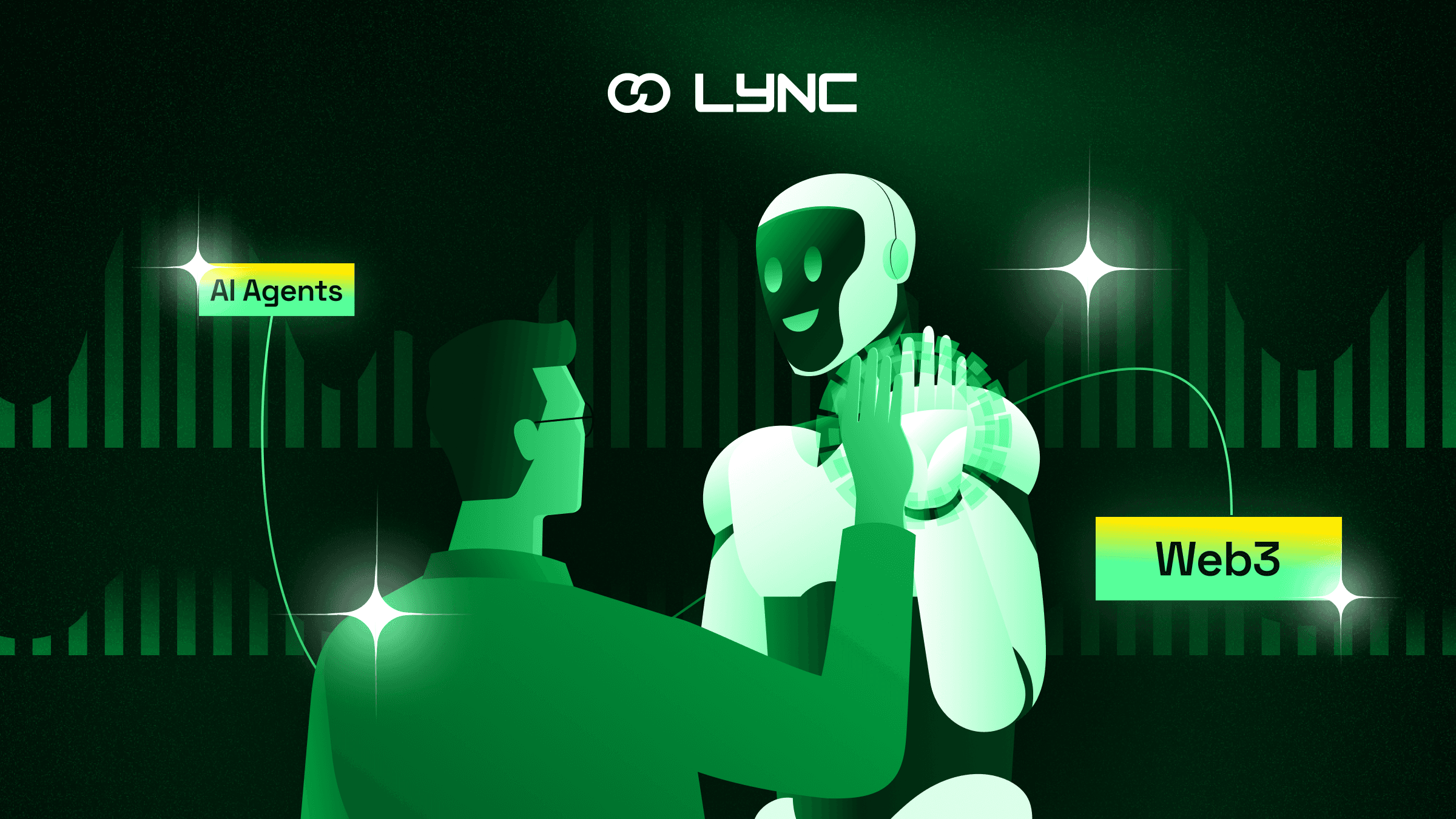
Artificial Intelligence has been a hot topic across various industries, and its integration with Web3 has produced a major innovation in the space- Web3 AI Agents. These autonomous agents are self-sufficient systems capable of making decisions, learning from their experiences, and even executing complex tasks like managing portfolios and enriching the Web3 gaming experiences.
Their applications are almost limitless. They can transform how we interact with decentralized platforms, automate financial operations, and revolutionize governance and digital economies within Web3.
You might be wondering how these agents work in the real world and how you can use them. Keep reading to find out!
Back in the early 2000s through the 2010s, we relied on chatbots that operated solely on command and predefined keywords. However, AI agents are a lot smarter and more efficient. They are able to understand concepts, learn from interactions, and even make autonomous decisions without human supervision or intervention.
In Web3, AI agents are the main pillar of automation. They do all the work in the background while you go about your business. They operate by first collecting raw data from their environment, which could include: real-time market data, user input, or blockchain transactions. Then, using their advanced algorithm and machine learning, they analyse this data and decide the best course of action.
For example, instead of having to ask them ‘what is the best time to buy a particular crypto or make certain trades’ they simply, by their own assessment, act in your best interest, executing the most optimal trade or suggesting it without needing explicit instructions.
But what makes this truly groundbreaking in the Web3 space is its decentralized nature. These crypto AI agents don’t rely on centralized servers to function. Instead, they interact directly with smart contracts, on-chain data, and decentralized applications (dApps). This ensures greater transparency, reduced bias, and more secure execution of tasks. Essentially, they serve as your autonomous assistant in a trustless ecosystem—executing commands, learning your behavior, and adapting to market dynamics with zero downtime.
AI agents in blockchain have gained a lot of traction in the real world and are now relied upon in various industries. This demand shows no sign of slowing down and according to research and markets, AI agents are estimated to experience a projected growth from over USD 371 billion in 2025 to USD 2.4 trillion by 2030, reflecting a robust compound annual growth rate (CAGR) of 30.6%.
This rapid growth is not just on paper—it’s playing out in real-time across the Web3 ecosystem. From finance and governance to NFTs and gaming, AI agents are quietly reshaping how users interact with decentralized platforms by automating complex decisions and streamlining everyday tasks, all made possible by the evolving AI agent infrastructure for Web3, which provides the backbone for deployment, communication, and seamless integration with on-chain systems.
Let’s break down a few realistic scenarios where on chain AI agents are already making waves in the Web3 world:
In blockchain games, AI agents can control non-player characters (NPCs) that adapt to your skill level, making games smarter and more engaging. Moreover, they can optimize asset usage (like NFTs or tokens) for maximum in-game performance or resale value. Projects like Lync are exploring such integrations, ensuring games remain both fun and economically rewarding.
On-chain AI agents can monitor market fluctuations, compare yields across protocols, and automatically rebalance portfolios to maximize returns. Imagine earning optimal yield from your crypto holdings without lifting a finger. An AI agent ensures you’re not leaving money on the table.
Voting and proposal participation can be delegated to AI agents that understand your preferences. For instance, if you consistently vote in favor of eco-friendly proposals in a DAO, your agent can continue doing so even while you’re offline, ensuring your voice is heard.
Advanced agents are replacing static chatbots in Discord or Telegram communities. They moderate conversations, provide dynamic assistance to users, and escalate complex issues automatically. This is especially useful for Web3 startups that operate around the clock.
From automatically listing NFTs when floor prices spike to identifying undervalued collections using real-time data, AI agents are becoming essential tools for NFT traders and collectors. Imagine you’re a casual NFT collector with a full-time job. You barely have time to track market shifts or new project trends. An AI agent can monitor floor prices, rarity scores, and even alert you before a valuable asset gets swept off the floor, all while you go about your day.
So… How Do You Use Them?
The beauty of an autonomous agent is that you don’t need to be a coder or tech expert to leverage them. Many Web3 platforms are integrating AI capabilities into their core user experience.
Not all platforms support AI agents yet, so your first step is to pick one that does. A few examples include:
Tip: Start by identifying what you want the AI agent to do—trade crypto, manage NFTs, assist in games, or handle community tasks. Then, explore which platform offers agents tailored to that need.
Most Web3-based AI tools will require you to connect a crypto wallet like MetaMask or WalletConnect. This allows the AI agent to interact with dApps, smart contracts, and assets in your control.
Don’t worry—these agents don’t have full access to your funds. You give them limited permissions, and you can revoke those anytime.
AI agents aren’t mind-readers (yet). You need to tell them what kind of behavior is acceptable. This includes things like:
Many platforms offer simple dashboards where you toggle options or drag sliders, so no coding is required.
The more you interact, the better your AI agent gets. Over time, they begin to recognize your habits:
This is called reinforcement learning—the agent picks up on patterns and fine-tunes its behavior based on what it sees works best for you. It’s like training a super-intelligent, crypto-savvy assistant who gets better with every task.
Before going all-in, start with a basic task. For example:
Check performance reports if available. Most platforms offer summaries or insights into the decisions your agent made, so you’re never flying blind.
AI agents are powerful, but they’re not perfect. Always:
AI agents are still evolving, but they’re already simplifying the way users interact with decentralized ecosystems. With the right platform, clear goals, and a bit of patience, you can train a digital agent to do everything from optimizing DeFi yields to managing your presence in DAOs, freeing you up to focus on what matters most.
And the best part? Projects like Lync are working behind the scenes to make this experience seamless and intuitive. They’re quietly powering the next phase of your Web3 journey, set to transform how you interact with decentralized platforms.
November 27, 2025
The world of competitive gaming is global by nature, yet managing backend operations for such a wide-reaching network is no easy task. For companies supporting this rapid, worldwide growth, the key challenge lies in balancing decentralized community building with consistent,...
Author
November 26, 2025
Digital transactions move fast, yet most payment operations still rely on workflows that slow businesses down. Teams spend hours on manual approvals, reconciliations, compliance checks, settlement processes and operational tracking. As volumes grow, these workflows create bottlenecks that limit how...
Author
November 21, 2025
Crypto wallets have evolved from clunky browser extensions to invisible infrastructure that powers everyday apps. A new generation of apps now provide a wallet inside the product flow itself, so users can sign in, store assets and complete transactions without...
Author
November 19, 2025
In late 2025, two of the internet’s biggest infrastructure providers, Cloudflare and Amazon Web Services (AWS), faced major outages that disrupted millions of websites and apps worldwide. Popular platforms like X (formerly Twitter), OpenAI’s ChatGPT, Slack, Fortnite, and Upwork were...
Author
November 13, 2025
A silent revolution is taking place in the digital world. Intelligent agents are beginning to make decisions, negotiate deals, and exchange value with minimal supervision. This new phase of progress is called the agentic economy, a model where AI-powered entities...
Author
November 7, 2025
The gaming world has always evolved, from arcade machines to consoles, from online multiplayer to esports, but few shifts have been as revolutionary as Play-to-Earn (P2E) gaming. In this model, players no longer just play for entertainment; they play to...
Author
November 5, 2025
E-commerce is no longer about clicks, it’s more about conversations. As users spend more time on chat platforms than on traditional websites, the next frontier of online shopping is emerging inside messaging apps. Leading that charge is Telegram, a platform...
Author
November 4, 2025
The digital economy is evolving beyond human-initiated transactions. As AI becomes more agentic, capable of making autonomous decisions, our financial systems are being redefined. The next logical step is clear: payments that not only execute but also think, adapt and...
Author
October 31, 2025
Digital wallets are the entry point into Web3. They act as the keys to decentralized apps, enabling users to send and receive crypto, verify digital identities and manage assets, without relying on banks or intermediaries. But setting up a wallet...
Author
Unlock special content and connect with others.
Join our community today!


